
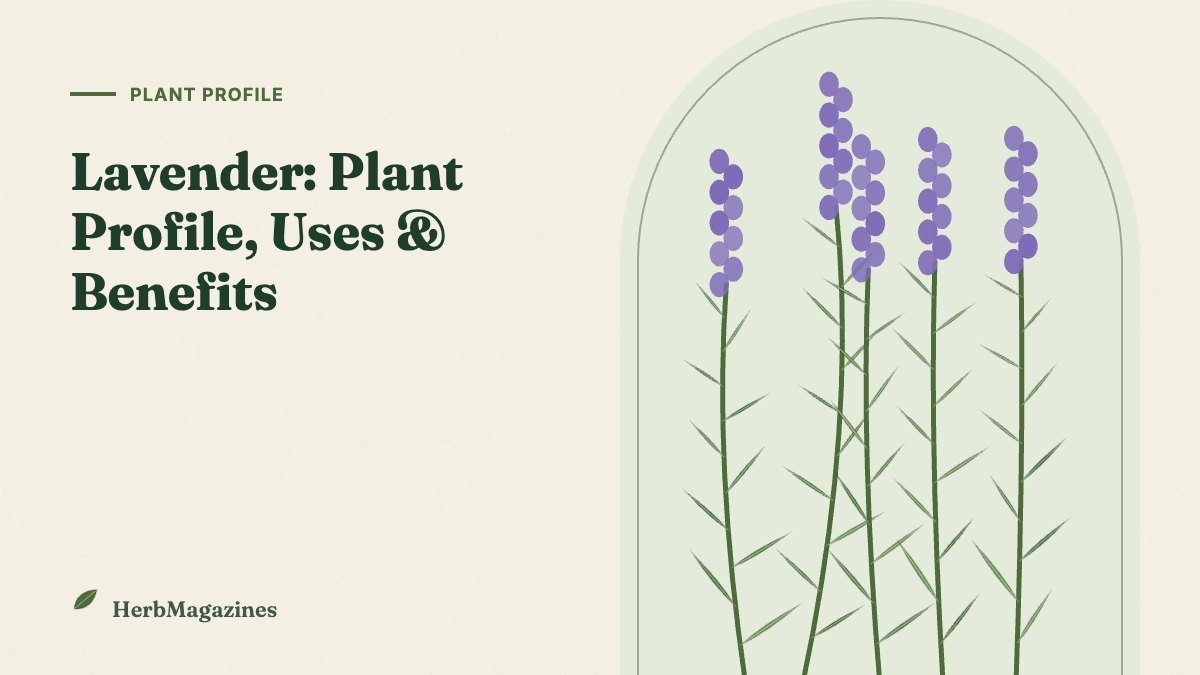
Lavender (Lavandula angustifolia) is a fragrant Mediterranean shrub whose essential oil – rich in linalool and linalyl acetate – has evidence for easing anxiety and improving sleep. English lavender is the best type for cooking, tea and gardens in cooler climates, while French and Spanish lavenders are showier but less hardy. It is one of the most useful and easy-to-grow herbs for UK and US gardens.
Key takeaways
- There are about 45 species of lavender; L. angustifolia (English lavender) is the most widely used.
- Its calming effects are linked to linalool and linalyl acetate.
- Oral lavender oil (silexan) has strong evidence for generalised anxiety.
- English lavender is hardy to around –20 °C (–4 °F) and needs full sun and sharp drainage.
- Do not swallow undiluted essential oil; it is for external use and inhalation only.
Lavender at a glance
| Feature | Detail |
|---|---|
| Botanical name | Lavandula angustifolia (English lavender) |
| Family | Lamiaceae (mint family) |
| Native range | Western Mediterranean mountains |
| Height | 30–90 cm (1–3 ft) |
| Flowering | June to August (UK/US) |
| Hardiness | RHS H5; USDA zones 5–9 |
| Main compounds | Linalool, linalyl acetate, camphor (low), 1,8-cineole |
| Parts used | Flowers, essential oil |
The main types of lavender
- English lavender (L. angustifolia) – despite the name, native to the Mediterranean. Sweet, soft fragrance, low camphor; best for cooking and hedges. Popular cultivars include ‘Hidcote’ (deep purple) and ‘Munstead’.
- Lavandin (L. × intermedia) – a vigorous hybrid with long stems and high oil yield, grown on the famous fields of Provence. More camphorous; varieties include ‘Grosso’.
- French or Spanish lavender (L. stoechas) – easily recognised by its “rabbit ear” bracts on top of the flower. Less hardy and with a sharper, resinous scent.
- Fringed lavender (L. dentata) – toothed leaves, long-flowering, tender.
History and name
The name likely comes from the Latin lavare, “to wash”, as Romans scented their baths with it. Lavender was grown in medieval monastery gardens, strewn on floors to deter pests and hung in linen cupboards. In the 1910s, French chemist René-Maurice Gattefossé popularised the term “aromatherapy” after his interest in lavender oil for burns. Norfolk in England has a long tradition of lavender farming.
Evidence-based benefits of lavender
Anxiety
Lavender has some of the best evidence of any herb for anxiety. Capsules of a standardised lavender oil called silexan (80–160 mg daily) reduced anxiety in several randomised trials, with effects similar to paroxetine in one study. See herbs for anxiety.
Sleep
Inhaling lavender oil has improved self-reported sleep quality in small trials, including in hospital patients and students. Effects are modest, but a few drops on a cloth near the pillow is a low-risk addition to a bedtime routine. Pair it with our best herbal teas for sleep.
Pain and skin
Some studies suggest lavender aromatherapy reduces perceived pain after surgery and during procedures. Diluted lavender oil is traditionally used for minor burns, bites and blemishes, though evidence is limited.
How to use lavender
- Tea: ½–1 tsp dried culinary lavender per cup, steeped 5 minutes. Blend with chamomile or lemon balm.
- Cooking: a little goes a long way in shortbread, lemonade, honey, scones and roast lamb. Use English lavender only.
- Aromatherapy: 2–4 drops in a diffuser, or a drop on a tissue.
- Bath: mix 5–10 drops in a tablespoon of carrier oil before adding to bathwater.
- Sachets: dried flowers in muslin bags deter moths and scent drawers.
How to grow lavender
- Sun: at least 6–8 hours of direct sun a day.
- Soil: poor to moderately fertile, very well drained, neutral to alkaline. Add grit to heavy clay. Lavender dies in waterlogged winter soil more often than from cold.
- Planting: spring is best, 45–60 cm apart (30 cm for a hedge).
- Watering: water until established, then rarely.
- Pruning: the key to long-lived plants. Trim after flowering in late summer, cutting back to just above new growth – never into old, bare wood, which rarely regrows.
- Harvesting: cut stems when about half the buds on the spike have opened, in the morning after the dew has dried. Dry in bunches upside down – see how to dry fresh herbs.
Safety
- Lavender essential oil should not be swallowed undiluted and should be kept away from children. Oral use should only be with formulated capsules.
- It can cause skin irritation in sensitive people; always dilute.
- Lavender may add to the effect of sedatives.
- Some research raised questions about lavender and tea tree oils and hormonal effects in young boys; evidence is inconclusive, but avoid regular heavy topical use on children.
- It is toxic to cats in concentrated forms; avoid diffusing oils around pets.
Frequently asked questions
What is the difference between English and French lavender?
English lavender (Lavandula angustifolia) is hardier, sweeter-scented and best for cooking. French lavender usually refers to Lavandula stoechas, which has distinctive “rabbit ear” petals, a sharper scent and is less tolerant of cold.
Does lavender really help you sleep?
Inhaled lavender has improved sleep quality modestly in small studies. It works best as part of a consistent bedtime routine.
Can you drink lavender tea?
Yes. Use dried culinary English lavender in small amounts – about half to one teaspoon per cup – as too much tastes soapy.
When should I prune lavender?
Prune lavender after flowering in late summer, trimming back to just above the new leafy growth. Avoid cutting into old, bare wood.
Is lavender safe for pets?
Lavender plants in the garden are generally low risk, but concentrated lavender essential oils can be toxic to cats and dogs, so avoid diffusing them near pets.
Sources and further reading
- Royal Horticultural Society – Lavender: how to grow
- NCCIH – Lavender
- Kasper S et al. (2014) Lavender oil preparation Silexan is effective in generalized anxiety disorder. International Journal of Neuropsychopharmacology.