
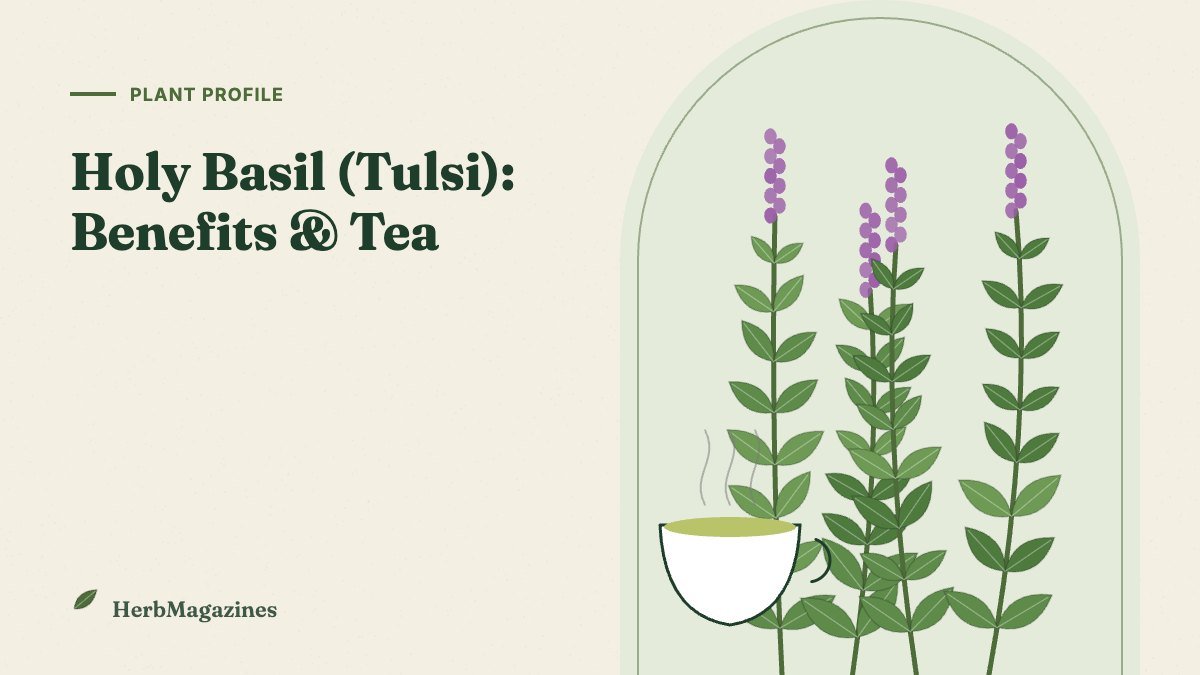
Holy basil, or tulsi (Ocimum tenuiflorum), is a sacred herb in India that is used as a gentle adaptogen to help the body cope with stress. Small human trials suggest tulsi may reduce stress symptoms and modestly improve blood sugar and cholesterol. Unlike sweet basil, it has a peppery, clove-like flavour and is usually enjoyed as a caffeine-free tea.
Key takeaways
- Tulsi (Ocimum tenuiflorum, syn. O. sanctum) is a different species from sweet basil (O. basilicum).
- It is revered in Hinduism and grown in courtyards across India.
- A 2017 systematic review of 24 human studies found favourable effects on stress, metabolism and immunity.
- Its key compound eugenol gives tulsi a clove-like aroma.
- Avoid medicinal amounts in pregnancy, when trying to conceive, or before surgery.
What is holy basil?
Holy basil is a fragrant, bushy herb native to the Indian subcontinent. In Hindu tradition it is considered an earthly manifestation of the goddess Tulsi, and many households grow it in a special raised planter (tulsi vrindavan) and tend it daily. In Ayurveda it is called “the incomparable one” and “the queen of herbs”.
The three types of tulsi
| Type | Appearance | Flavour |
|---|---|---|
| Rama tulsi | Green leaves | Mellow, cooling, clove-like |
| Krishna (Shyama) tulsi | Purple leaves and stems | Peppery, more pungent |
| Vana tulsi (O. gratissimum) | Light green, tall | Lemony, wild |
Holy basil vs sweet basil
Sweet basil (Ocimum basilicum) is the Italian kitchen herb used for pesto, with a sweet, anise-like flavour. Thai basil is a variety of sweet basil. Holy basil is a separate species with hairy stems and a spicy, clove-and-pepper taste. In Thailand, holy basil (kaphrao) is used in the famous stir-fry pad kra pao.
Benefits of tulsi: what research shows
Stress and anxiety
Tulsi is considered an adaptogen. A systematic review of 24 human studies published in 2017 concluded that tulsi had favourable effects on stress, anxiety, sleep and cognitive function, although most trials were small and short. In one six-week trial, adults taking tulsi extract reported a significant reduction in stress symptoms compared with placebo. It is a gentler option than ashwagandha.
Blood sugar and cholesterol
Several small trials in people with type 2 diabetes found tulsi leaf lowered fasting and post-meal blood glucose. Some studies also show improvements in total cholesterol and triglycerides. If you take diabetes medication, monitor your levels.
Antimicrobial and oral health
Tulsi’s essential oil, rich in eugenol, has antibacterial and antifungal activity in lab studies, and tulsi mouthwash reduced dental plaque in small trials.
How to make tulsi tea
- Use 1–2 teaspoons of dried tulsi or 8–10 fresh leaves per cup.
- Pour over boiling water.
- Cover and steep for 5–10 minutes.
- Add honey, lemon, ginger or cardamom if you like.
Tulsi blends well with green tea, rose, chamomile and lemongrass. Two to three cups a day were used in some studies.
How to grow holy basil
- Holy basil is a tender perennial grown as an annual in the UK and most US states (perennial in USDA zones 10–11).
- Sow seeds indoors in spring at 20–25 °C; seeds need light to germinate, so press them onto the compost surface.
- Plant out after the last frost in full sun and rich, moist but well-drained soil, or grow on a sunny windowsill.
- Pinch out flower spikes to keep leaves coming, or leave some for bees.
More tips in how to grow herbs indoors.
Safety
- Tulsi tea is generally safe for adults in normal amounts.
- Pregnancy and fertility: animal studies suggest high doses may affect fertility; avoid medicinal doses if pregnant or trying to conceive.
- Blood thinners: tulsi may slow blood clotting; stop two weeks before surgery.
- Diabetes medication: additive blood-sugar-lowering effect possible.
- Hypothyroidism: one animal study suggested it may lower thyroxine levels.
Frequently asked questions
Is holy basil the same as basil?
No. Holy basil (Ocimum tenuiflorum) is a different species from sweet basil (Ocimum basilicum). It has a spicy, clove-like taste and is mainly used as a tea and in Ayurvedic medicine.
What does tulsi tea do for the body?
Tulsi tea is used as a gentle adaptogen. Small studies suggest it may reduce stress and modestly improve blood sugar and cholesterol levels.
Can I drink tulsi tea every day?
Most healthy adults can drink two to three cups of tulsi tea daily. Avoid medicinal amounts if you are pregnant, trying to conceive or taking blood thinners.
Does tulsi tea contain caffeine?
No. Pure tulsi tea is naturally caffeine-free, though some blends include green or black tea.
Can I grow holy basil in the UK?
Yes, as an annual. Grow it on a sunny windowsill or plant it outside after the last frost in a warm, sheltered spot.
Sources and further reading
- Jamshidi N, Cohen MM (2017) The clinical efficacy and safety of tulsi in humans: a systematic review of the literature. Evidence-Based Complementary and Alternative Medicine.
- Cohen MM (2014) Tulsi – Ocimum sanctum: a herb for all reasons. Journal of Ayurveda and Integrative Medicine.