
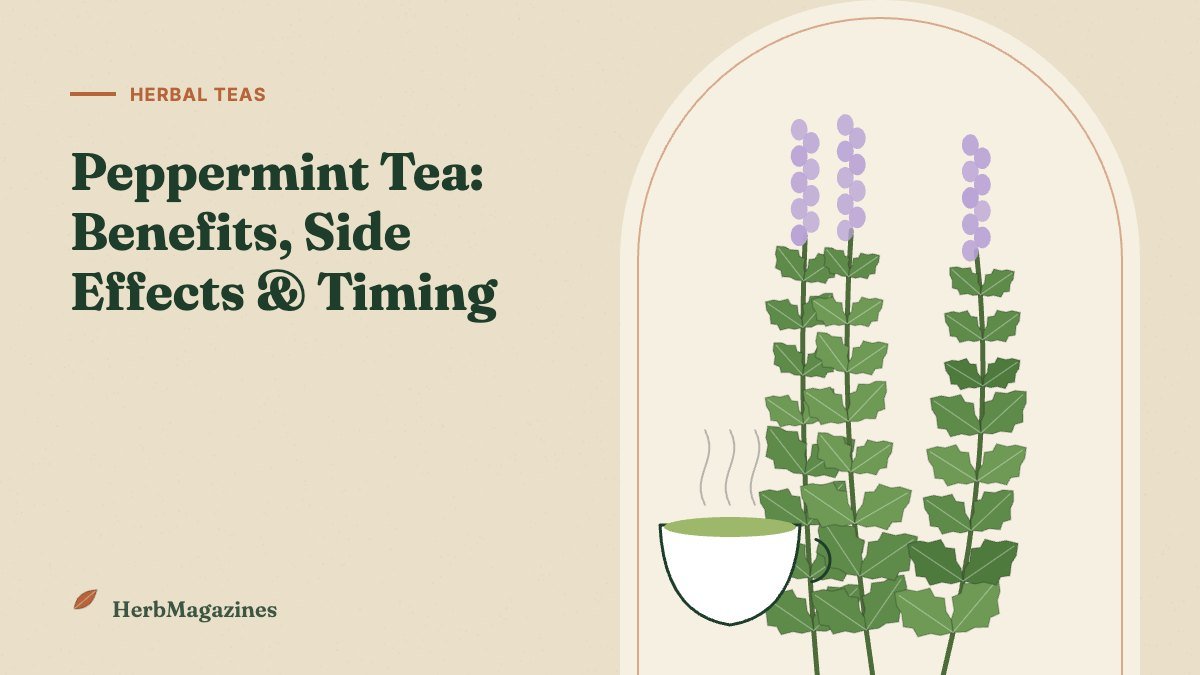
Peppermint tea is best known for relieving bloating, wind and indigestion, and its key compound, menthol, relaxes the muscles of the gut. Enteric-coated peppermint oil capsules are even recommended for irritable bowel syndrome (IBS) by the UK’s NICE and the American College of Gastroenterology. The tea is caffeine-free and safe for most people, but it can make heartburn and acid reflux worse.
Key takeaways
- Peppermint (Mentha × piperita) is a natural hybrid of watermint and spearmint.
- Menthol relaxes smooth muscle in the digestive tract, easing cramps and bloating.
- Peppermint oil capsules have good evidence for IBS; the tea is gentler and less studied.
- Drink it after meals for digestion, or any time for a caffeine-free lift.
- Avoid it if you have GERD or frequent heartburn, as it relaxes the lower oesophageal sphincter.
What is peppermint?
Peppermint (Mentha × piperita) is a hybrid mint that arose naturally from a cross between watermint (Mentha aquatica) and spearmint (Mentha spicata). It was first formally described in England in the late 17th century, and the county of Surrey was once famous for its peppermint oil, which was considered the finest in the world. Today most peppermint is grown in the US Pacific Northwest, India and Morocco.
Its leaves are packed with essential oil – typically 1–3% by weight – made up mainly of menthol and menthone. Menthol is responsible for the cooling sensation, the clean aroma and most of the plant’s medicinal effects.
Peppermint tea benefits
1. Relief from bloating, wind and indigestion
Menthol blocks calcium channels in smooth muscle, which helps relax the walls of the stomach and intestines. This antispasmodic effect is why peppermint has been used for centuries to settle the stomach after a heavy meal. The European Medicines Agency lists peppermint leaf as a traditional herbal medicine for symptomatic relief of digestive disorders such as dyspepsia and flatulence.
2. Irritable bowel syndrome (IBS)
The strongest evidence is for enteric-coated peppermint oil capsules, not tea. Several meta-analyses of randomised trials have found that peppermint oil significantly improves global IBS symptoms and abdominal pain compared with placebo, and it appears in clinical guidance on IBS in both the UK and the US. Tea delivers far less oil and releases it in the stomach rather than the intestine, so it is better viewed as a comforting supportive drink.
3. Tension headaches
Rubbing diluted peppermint oil on the temples has been shown in small trials to ease tension-type headaches, with effects comparable to paracetamol (acetaminophen) in one study. Sipping the tea and inhaling the steam may offer a milder version of this effect, though tea itself has not been directly tested.
4. Blocked nose and colds
Menthol does not actually open up the nasal passages, but it stimulates cold receptors so breathing feels easier. Many people find a hot mug of peppermint tea comforting when they have a cold.
5. Fresher breath and alertness
Peppermint has antibacterial properties in lab studies and is a natural breath freshener. Some small studies also link peppermint aroma with improved alertness and reduced fatigue, which makes it a popular caffeine-free afternoon drink.
Peppermint tea side effects
| Side effect or risk | Who is affected | What to do |
|---|---|---|
| Heartburn and reflux | People with GERD or hiatus hernia | Avoid or limit; menthol relaxes the valve between stomach and oesophagus |
| Allergic reaction | Rare; people sensitive to mint family | Stop drinking if you develop a rash or mouth irritation |
| Drug interactions | Those on ciclosporin, some antacids | Peppermint oil may affect absorption; check with a pharmacist |
| Gallstones | People with gallbladder disease | Ask a doctor before using concentrated peppermint products |
| Infants | Babies and very young children | Do not apply menthol or peppermint oil near a baby’s face |
How to make peppermint tea
- Use 1 tea bag or 1–2 teaspoons of dried leaves, or a small handful (around 8–10) of fresh leaves per mug.
- Pour over freshly boiled water.
- Cover and steep for 5–7 minutes.
- Strain, then sweeten with honey if wanted.
Fresh peppermint gives a brighter, sweeter cup than dried. If you grow your own, our guide on how to grow mint without it taking over shows how to keep a constant supply.
When is the best time to drink peppermint tea?
- After meals – to ease fullness and bloating.
- Mid-afternoon – as a caffeine-free pick-me-up.
- Before an exam or long drive – for its refreshing aroma.
- Avoid at bedtime if you have reflux – lying down after peppermint can trigger heartburn.
Peppermint vs spearmint tea
Spearmint contains much less menthol and more carvone, giving it a sweeter, softer flavour. It is less likely to aggravate reflux and is the mint traditionally used in Moroccan mint tea. Peppermint is stronger, cooler and more effective for digestive cramps.
The bottom line
Peppermint tea is a refreshing, caffeine-free drink with real digestive benefits. For diagnosed IBS, ask your GP or doctor about enteric-coated peppermint oil capsules, which have stronger evidence. If you experience heartburn, try ginger tea or chamomile instead.
Frequently asked questions
Is peppermint tea good for bloating?
Yes. Menthol relaxes the smooth muscle of the gut, which can help trapped wind and bloating pass more easily. It is most effective when drunk after a meal.
Can I drink peppermint tea every day?
Most healthy adults can drink two to three cups of peppermint tea a day without problems. Avoid it if it triggers heartburn.
Does peppermint tea help IBS?
Peppermint oil capsules have good evidence for easing IBS symptoms. Peppermint tea is milder and less studied but may still help some people with cramping and bloating.
Does peppermint tea have caffeine?
No. Pure peppermint tea is naturally caffeine-free.
Why does peppermint tea give me heartburn?
Menthol relaxes the lower oesophageal sphincter, the muscle that keeps stomach acid out of the food pipe. This can allow acid to flow upwards, causing reflux.
Sources and further reading
- NCCIH – Peppermint Oil
- NICE CG61 – Irritable bowel syndrome in adults: diagnosis and management
- European Medicines Agency – Menthae piperitae folium herbal monograph
- Alammar N et al. (2019) The impact of peppermint oil on the irritable bowel syndrome: a meta-analysis of the pooled clinical data. BMC Complementary and Alternative Medicine.